
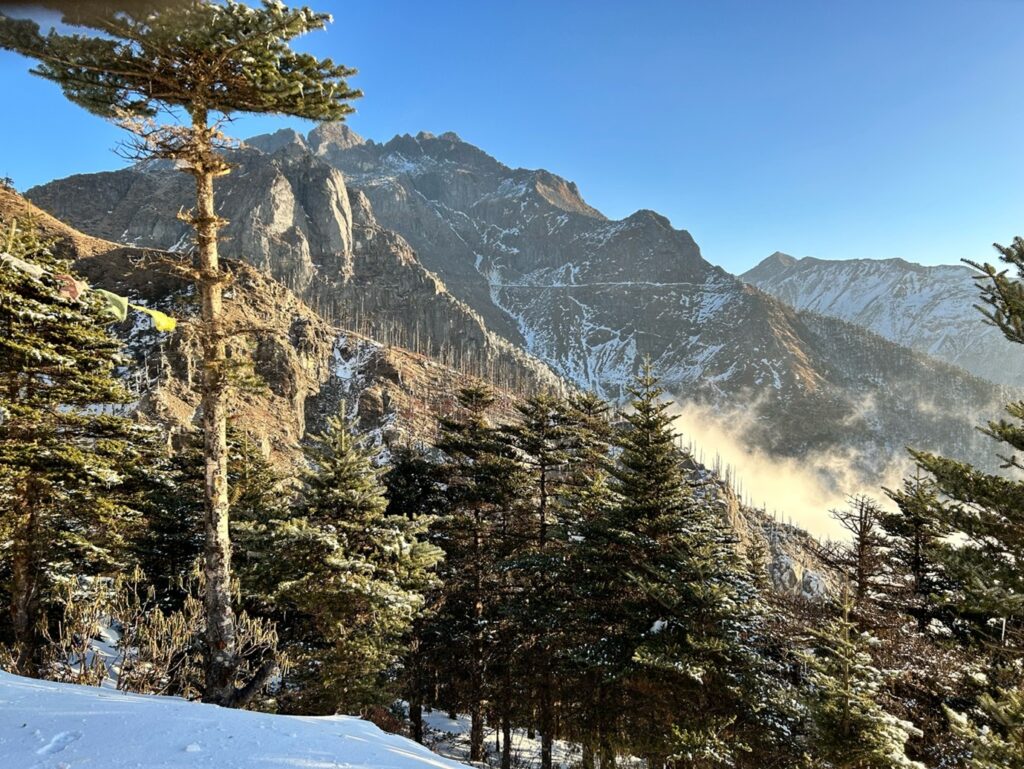
For experienced birders, Arunachal Pradesh represents one of the last genuinely wild frontiers in Asia. Wedged between Bhutan, China, and Myanmar, this remote Indian state sits at the intersection of three major biogeographic zones, the Eastern Himalayas, the Indo-Malayan region, and the Indo-Chinese subregion producing a collision of avifauna found nowhere else on earth. Birding in Arunachal Pradesh means targeting species that cannot be ticked anywhere else: range-restricted endemics, range-limited Himalayan specialists, and some of the most sought-after birds in the subcontinent.
This guide covers the key birding regions, the target species that draw global birders, seasonal timing, and what separates a productive Arunachal expedition from an ordinary one.
Why Arunachal Pradesh Is a World-Class Birding Destination
Arunachal Pradesh holds over 700 recorded bird species, a figure that rivals entire countries. What makes this number extraordinary is the concentration of endemics and near-endemics packed into a relatively compact geographic area. The state’s altitudinal range, from the Brahmaputra floodplains below 200 metres to peaks exceeding 6,000 metres, compresses an astonishing variety of habitat types into accessible birding circuits.
The forests here remain largely intact. Unlike much of the Indian subcontinent, Arunachal Pradesh has retained vast stretches of primary subtropical and temperate forest, and it is in these forests dense, layered, and extraordinarily productive that the real birding happens. Mixed-species flocks move through the canopy like clockwork, and finding the right flock at the right altitude often yields ten or fifteen target species in a single morning.
This is not casual birdwatching. Birding in Arunachal Pradesh rewards preparation, patience, and the willingness to be in the field before first light.
Key Target Species: The Endemics and Near-Endemics
Bugun Liocichla: Arunachal’s Most Celebrated Endemic
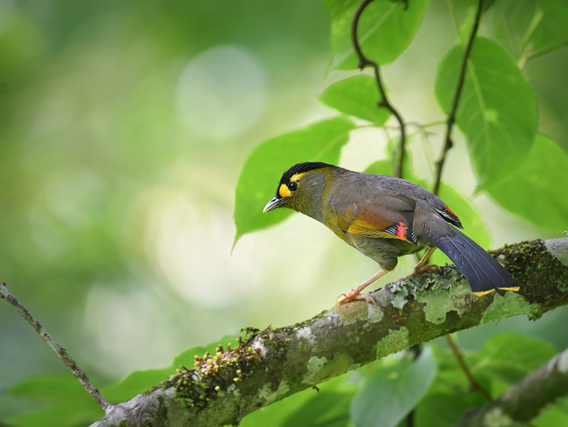
No species defines eastern Himalayan birding quite like the Bugun Liocichla (Liocichla bugunorum). Described as a new species only in 2006 from Eaglenest Wildlife Sanctuary, the total known population is estimated at fewer than 30 individuals. It remains one of the rarest birds in the world and an almost mythical target for visiting birders. The species holds a tiny range within a single valley in West Kameng, and reliable sightings remain the work of expert-guided mornings in the right forest patch.
Sclater’s Monal and Blyth’s Tragopan
Higher-altitude birding in Arunachal targets two iconic pheasants. Sclater’s Monal (Lophophorus sclateri) occupies subalpine scrub and rhododendron forest above 3,000 metres and is one of the most striking birds in the Himalayas. Blyth’s Tragopan (Tragopan blythii) is a temperate forest specialist found in dense undergrowth between 1,800 and 3,500 metres. Both require dedicated effort and typically altitude-specific day trips to reliable areas.
Hornbills of the Eastern Himalayas
Arunachal Pradesh holds five hornbill species, and the Rufous-necked Hornbill (Aceros nipalensis) globally threatened and largely confined to Eaglenest and Namdapha is among the highest-priority targets for many visiting birders. Great Hornbill, Wreathed Hornbill, Oriental Pied Hornbill, and Brown Hornbill are also regularly recorded. Hornbill fruiting-tree stakeouts in early morning are among the most productive sessions of any northeast India birding tour.
Other High-Priority Species
The target list for Arunachal Pradesh is extensive, but several species consistently appear near the top of serious birders’ wishlists:
-
- Beautiful Nuthatch: (Sitta formosa) arguably the most spectacular nuthatch on earth, found in mixed broadleaf forest
-
- Ward’s Trogon: (Harpactes wardi) a deep-forest species of the subtropical zone, most reliably found in Eaglenest
-
- Rusty-bellied Shortwing: (Brachypteryx hyperythra) skulking, near-endemic, found in dark undergrowth of lower slopes
-
- Pale-headed Woodpecker: (Gecinulus grantia) bamboo specialist of the foothills
-
- Black-breasted Parrotbill: (Paradoxornis flavirostris) grassland and reed specialist of the Brahmaputra floodplain edge
-
- Mishmi Wren-Babbler: (Spelaeornis badeigularis) a Mishmi Hills micro-endemic, one of the most challenging targets in northeast India birding
Key Birding Regions in Arunachal Pradesh
Eaglenest Wildlife Sanctuary, West Kameng

Eaglenest is the jewel of Arunachal Pradesh birding and arguably the most biodiverse single birding site in the Indian subcontinent. A single visit to Eaglenest can yield 300-plus species across three to four days, spanning elevations from around 700 metres to over 3,000 metres. The sanctuary’s birding camps sit within primary forest, and the morning walks along Eaglenest’s main road particularly the stretch through subtropical and temperate transition zones are among the most productive hours of birding available anywhere in Asia.
Primary targets here include Bugun Liocichla, Ward’s Trogon, Beautiful Nuthatch, Rufous-necked Hornbill, Blyth’s Tragopan, and a staggering variety of laughing-thrushes, babblers, fulvettas, and minlas moving in mixed-species flocks.
Mishmi Hills, Dibang Valley

The Mishmi Hills represent a more remote and demanding birding experience and a more rewarding one for birders targeting micro-endemics and restricted-range species. The Dibang Valley holds species found in very few other locations globally, including the Mishmi Wren-Babbler and several range-restricted laughingthrushes. Access is more complex, requiring inner-line permits and a well-organised logistics plan, and this is precisely why the birding here remains relatively under-pressure.
Increasingly, serious birders researching northeast India are extending their itineraries into the Mishmi Hills and for good reason.
Namdapha National Park, Changlang
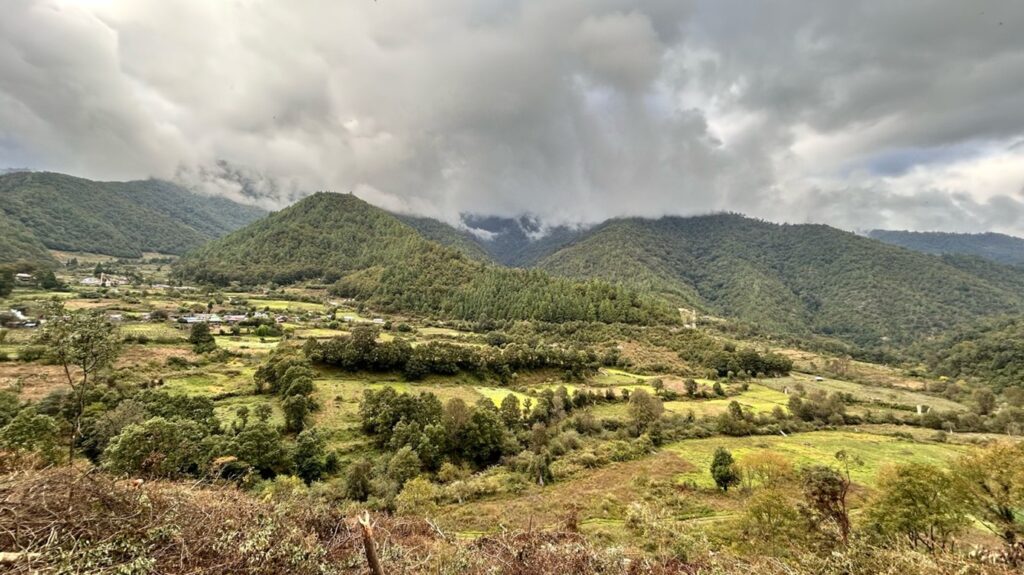
Namdapha is the largest protected area in the Eastern Himalayas and one of the last places in India where tiger, leopard, snow leopard, and clouded leopard coexist in a single landscape. For birders, it offers access to species of the Indo-Malayan zone that barely penetrate into India, including Rufous-bellied Eagle, Blyth’s Kingfisher, and a suite of lowland forest specialists. The logistics are demanding and distances are large Namdapha rewards birders who plan it as a dedicated destination rather than an add-on.
Best Season for Birding in Arunachal Pradesh
October through April is the primary birding season, with the peak window falling between November and March. During these months, winter visitors have arrived from higher elevations and from Central Asia, mixed-species flocks are at peak activity, and the foliage has thinned sufficiently to make forest birding productive.
October and November see the best conditions at Eaglenest, when species are moving between elevations and flock activity is at its highest. February and March bring the first breeding activity, with display calls making many species more detectable. April marks the start of the rhododendron flowering season at higher elevations, often producing exceptional activity around flowering trees.
The monsoon (June–September) closes most high-altitude areas and makes access to Arunachal Pradesh extremely difficult. The occasional dry-season exception aside, arunachal birdwatching expeditions are planned firmly within the October–April window.
Planning a Birding Expedition to Arunachal Pradesh
Access to Arunachal Pradesh requires an Inner Line Permit (ILP) for Indian nationals and a Protected Area Permit (PAP) for international visitors, both of which must be arranged in advance. Entry is typically via Tezpur or Guwahati in Assam before moving into the state.
Driving is the primary mode of travel between birding sites, and early starts typically departing camp well before dawn are non-negotiable on a productive expedition. The roads in Arunachal Pradesh are variable in quality, and the birding itself is physically demanding, involving early mornings, steep forest trails, and variable weather across altitudes.An expert-guided small-group format is far and away the most effective approach for serious birders. Local knowledge of specific forest patches, flock timings, and individual target-species locations makes the difference between a good list and a great one. Our Northeast India Birding Tour covers Eaglenest, the Mishmi Hills, and surrounding areas in a format specifically designed for experienced birders targeting the endemics.
Frequently Asked Questions
What is the single best site for birding in Arunachal Pradesh?
Eaglenest Wildlife Sanctuary in West Kameng is consistently rated the most productive single birding site in northeast India. The combination of accessible forest habitat, altitudinal range, and extremely high species density including the Bugun Liocichla makes it the centrepiece of most Arunachal birding itineraries.
How many days do I need for a productive Arunachal Pradesh birding trip?
A minimum of seven to ten days is recommended to cover Eaglenest and one additional site such as Pakke or the Mishmi Hills. A dedicated fifteen-day expedition covering western Arunachal and the Mishmi Hills gives the best chance of connecting with the full range of high-priority endemic species.
What permits are required for birding in Arunachal Pradesh?
Foreign nationals require a Protected Area Permit (PAP), which must be obtained before arrival in Arunachal Pradesh. Indian nationals require an Inner Line Permit (ILP). Both can be arranged through a registered tour operator. All logistics and permit processing are handled as part of our Northeast India Birding Tour package.
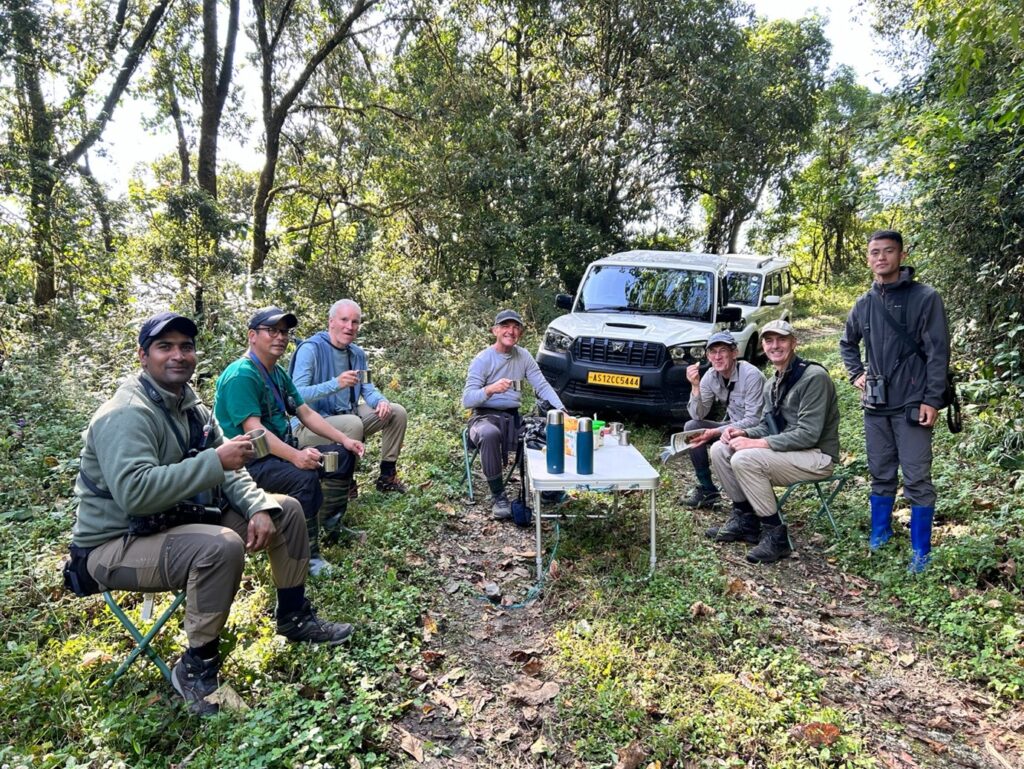
Arunachal Pradesh offers a calibre of birding that very few destinations anywhere in the world can match a combination of genuine endemics, intact forest, and extraordinary biodiversity that continues to attract some of the most experienced birders on the planet. If the Bugun Liocichla, Sclater’s Monal, or the hornbills of Eaglenest are on your target list, this is where you need to be.
Our expert-led Northeast India Birding Tour is designed specifically for serious birders targeting eastern Himalayan endemics, with small group sizes, specialist guides with deep field knowledge of the region, and itineraries built around the birds. Get in touch to plan your expedition.